OpenStreetMap logo OpenStreetMap

Diary Entries in English

Recent diary entries

Posted by Natfoot on 20 August 2022 in English.

Lights

First encounters

After mapping street lights and poles and then Seamark lights I looked deeper into how to map light mostly light that is made my man and is in a consistent location. The addition of mapping lighting in Street Complete made this question greater with a tag like lit=yes this is great and all but not very descriptive if talking about a street or a way that may have puddles of lights at each street light.

Beyond

This has taken me to the point of looking at adding night lighting to the tops of power poles or rotating beacons on top of airport towers. These sorts of things could be found it mapping seamarks but for the most part is not appropriate for Open Sea Map. This is the line between it exists and there is a standard to make the light show and to add the correct tags to describe its sequence of flashing but it is not a seamark light but there is overlap between. There are power pole or tower lights that do show on nautical charts.

Thoughts and reflection

Are we mapping with enough detail, is it easy for a first time mapper to contribute, and are we mapping for the renderer? Anything I missed below?

Lit:

osm.wiki/Key:lit

Highway:

osm.wiki/Key:flashing_lights osm.wiki/Tag:highway%3Dtraffic_signals osm.wiki/Key:crossing osm.wiki/Tag:highway%3Dstreet_lamp

Railway:

osm.wiki/Tag:railway%3Dlevel_crossing osm.wiki/Tag:railway%3Dsignal

Man_made:

osm.wiki/Tag:man_made%3Dlighthouse

Seamark: osm.wiki/Seamarks/Lights osm.wiki/Seamarks/INT-1_Section_P

Complicated Light mapping. osm.wiki/Seamarks/Sectored_and_Directional_Lights

Aviation: osm.wiki/Proposed_features/Aviation_Obstacle_Light

Posted by Skunkman56 on 17 August 2022 in English.

I have been tracking down some properties owned and managed by the University of Michigan, Michigan State University and Michigan Technological Univeristy. These include university properties managed as farms, forests, nature reserves, and field-based teaching. Many are open to the public, so this allows greater access to recreational opportunities by having these added and available in OSM.

Other efforts have been to map properties owned by the Nature Conservancy and other land trusts that are open to the public. County Forests, parks, and other local owned public properties are important in my view as well. The MapRoulette challenge for Michigan GNIS nodes by user BBMiller has been a useful tool to focus on those features, particularly the emphasis on adding the GNIS:feature_id identifier which will assist with Wikidata and Wikipedia integration.

I was inspired to create my own MapRoulette Challenge for Michigan GNIS stream and canal points to add the GNIS identifer where missing, as well as build in potential for future automated editingn tools to improve connectivity to wikidata, and just plain add in named rivers, streams, and drains that are missing from OSM, incomplete, or need their ways to be collected into relations.

Upcoming, i am thinking of making another MapRoulette challenge for the midpoints of roads on the Ottawa National Forest- most of those seem to be missing so that would be an opportunity to focus on digitizing and adding those in a high quality level from USGS 3DEP/aerial imagery rather than directly importing.

Just been a lot of fun working on Michigan things and figuring out some routes to improve OSM. See you in the changesets!

Posted by Jmapper007 on 16 August 2022 in English.

It has been the 435 days since the start of my OSM days, don’t remember why I started, I just did. It started small with adding minor businesses and fixing road names, then I mapped out large chunks of landuse at a time around my hometown. eventually, this evolved into an ongoing (though slowly moving) project across the Central-Eastern part of Connecticut. Then recently I got involved with the OSM Discord server for guidance. Also recently I began #NoteFreeCT like #CloseTheNotes but we (I) focus on Connecticut as a whole, also started a little micro mapping as well, hopefully all this doesn’t get too out of control.

Until next time, Jmapper007

P.S. next time most likely won’t be any time soon.

Location: South Windham, Windham, Southeastern Connecticut Planning Region, Connecticut, 06266, United States

The Problem

In order to do beautiful micro-mapping it is necessary to map ways with a lot of nodes. However, it is painful for other mappers to connect their own adjacent ways to these nodes.

Possible Solutions

  1. Some mappers have suggested using multi-polygons to cut those ways and attach multi-polygons. But I have a personal problem with this which stems from the fact that a lot of beginners have a hard time understanding the concept of multi-polygons and how to use them.

  2. Another solution is to remove the way entirely. However, this also removes the history of that item, which I’m averse to.

The Main Culprit

The #ADT Apple Data Team has been multiplying nodes on coastlines and waterways all over Central America. Here are some examples:

Changeset in Belize by DaleOfAire

Changeset in Belize by Ometepe

Changeset in Belize by Ometepe

Location: Bahía Puesta del Sol, Caye Caulker Village, Belize

The State of the Map 2022 (SotM) international conference will start in a few days. It will be the first in-person conference after the Covid19 pandemic started and thanks to the SotM volunteers, it will be a hybrid event.

While participating in SotM can be exciting for community members, it can also be stressful for introverts or people who plan to attend but want to minimise their social interactions due to Covid. Additionally, there are people who would like to approach others to talk to them, but may feel apprehensive doing so.

Trying to help with the above, this year I will bring some coloured communication pin-back buttons that community members can get and wear during the conference. The aim is to facilitate participants’ communication by making it easier to show if you want other people to talk to you at a given time or not.

What coloured communication pin-back buttons you can get at State of the Map 2022

The idea is that participants can wear a different button based on their communication preferences at the time. Showing a

  • green pin-back button: the person is actively seeking communication and wants to be approached by people interested in talking.
  • yellow pin-back button: the person wants to be approached by people they had discussions before. The person may approach other people to talk (if they wear an appropriate button or none at all), and that is ok.
  • red pin-back button: the person probably does not want to talk to anyone or just to selected people. The person may approach other people to talk (if they wear an appropriate button or none at all), and that is ok.

If someone talks to you even if your button indicates that they shouldn’t, please keep in mind that they might not know about these buttons.

See full entry

Since I started https://opencampingmap.org I do a lot of campsite-mapping.

Doing that I quickly realized, that just using capacity is ambiguous when used for campsites. Thus I just ignore it on my map and show it as a bug if used.

While there is often a limit on persons in backcountry campsites, tourist sites tend to have a limit regarding the number of tents or caravans!

So how to map? Well this is what I suggest to do:

  • If the number of people allowed to use the site is limited tag capacity:persons appropriately.
  • If the number of tents or caravans/RV is restricted use capacity:tents or capacity:caravans
  • If the site has a fixed number of pitches and does not distinguish between using them with a tent or caravan/RV use capacity:pitches instead.

Open Camping Map (GitHub) is a useful little tool developed by @giggls that provides camp site information for when you want to travel.

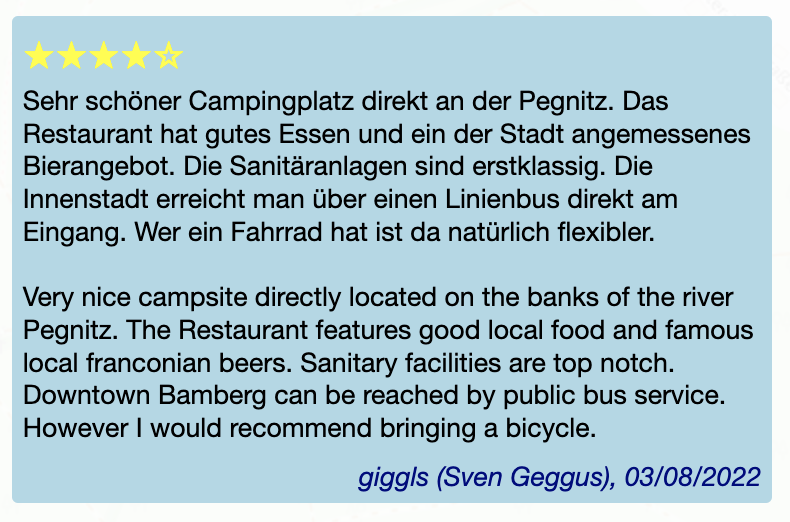
We recently added integration with Mangrove Reviews. When selecting a camp site, the Mangrove API is queried to get reviews based on the geo: link. Checkout this pull request for a behind-the-scenes look on the code.

And here’s how it looks:

Screenshot of a review

➡️ What do you think - is this useful? How do you feel about reviews in general? And: Which (FOSS) apps/websites do you use for camping?

Posted by Zverik on 14 August 2022 in English.

I know, Florence is too far away, and tickets are worth a fortune. I hesitated for weeks before shelling out 800 € for a flight and a hotel. That’s too much even for me, so I totally understand if you could not make it this year.

Thank gods for the Internet though! We are continuing with an option of virtual participation in SotM. Traditionally that have meant watching talks online and occasionally making people at the venue read your questions out loud. Not too fun when you have to concentrate on events happening thousands of kilometers away.

BUUUT this year we trying something different as well. First, passive participation: few people at the conference (or just me, we’ll see how it goes) would post photos and announcements and general impressions on everything going at and around the conference. It’s a way to get a glimpse at the experience of actually being there. I have done it in Russian for every SotM and FOSS4G and FOSDEM since 2016, and now I thought it might fit well into the virtual attendee package.

Also, active participation: record a video introduction of yourself and put it into the library of introductions. That way you can listen to people who attend the conference, either physically or virtually, and start a conversation with any of them. It is a magic tool that helps learn something about a person before approaching them: might help when you have an introvert’s anxiety (I should know!). And generally it’s fun: it highlights that a conference is not so much about talks and dinners, but about people first and foremost.

So, do buy a Venueless ticket at https://pretix.eu/osmf/SotM2022/ and join us: yes, you won’t be able to shake any hands or split a beer, but with a very little effort you can be a part of the conference.

Posted by SK53 on 12 August 2022 in English.

Back in March I was amused to see Amanda tweet that the UK OpenStreetMap community ran a solar power mapping project “several years ago”. This was the theme of the [quarterly project(osm.wiki/UK_2019_Q3_Project:_Solar_Power) in Q3 2019, but the project keeps trucking on.

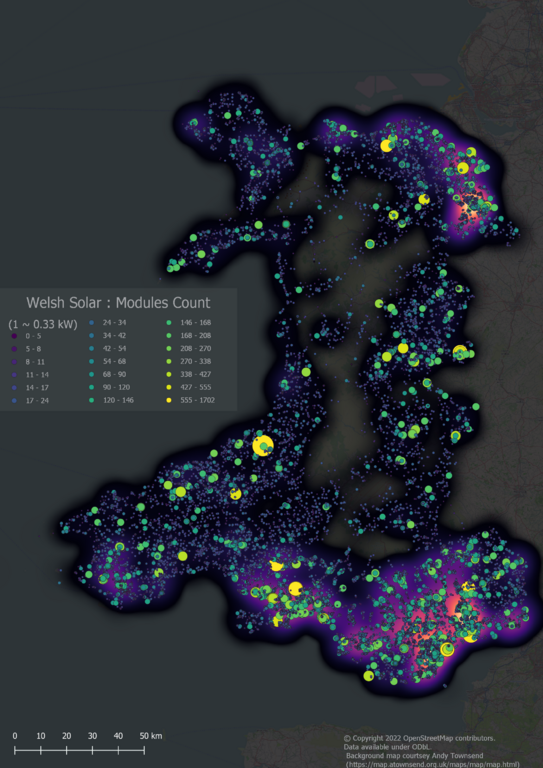
Small-scale Solar Power in Wales; Heat map overlaid with individual solar arrays

All small-scale Solar Power in Wales (i.e., excluding solar farms of more than 1MW capacity)

In the past few days we reached a milestone of having comprehensive solar cover for Wales, one of the constituent countries of the United Kingdom. I think this is the first country to have solar power mapped at such a fine level of detail either on OSM or anywhere else.

The rest of this post discusses aspects of the how & why of this work.

Solar Mapping in the UK

See full entry

Location: Llannon, Carmarthenshire, Wales, United Kingdom
Posted by pnorman on 12 August 2022 in English.

Dear all,

Today, v5.6.1 of the OpenStreetMap Carto stylesheet (the default stylesheet on the OSM website) has been released. Once changes are deployed on the openstreetmap.org it will take couple of days before all tiles show the new rendering.

Changes include

  • Fixing rendering of water bodies on zooms 0 to 4

Thanks to all the contributors for this release.

For a full list of commits, see https://github.com/gravitystorm/openstreetmap-carto/compare/v5.6.0…v5.6.1

As always, we welcome any bug reports at https://github.com/gravitystorm/openstreetmap-carto/issues

Representing the federal government of traffic I would like to upload the 12 Routes of national cycling routes, representing the Cycle Network Germany. All data ist quality checked and free to use (Data licence Germany – attribution – version 2.0)

Looking for a contact to provide a boost for OpenCycleMap and OSM in general

Geodata is already published: https://www.radroutenplaner-deutschland.de/veraDaten_EN.asp

Location: Neustadt/Nord, Innenstadt, Cologne, North Rhine-Westphalia, Germany

Toronto Police Service has major, systemic problems. But they also have this one:

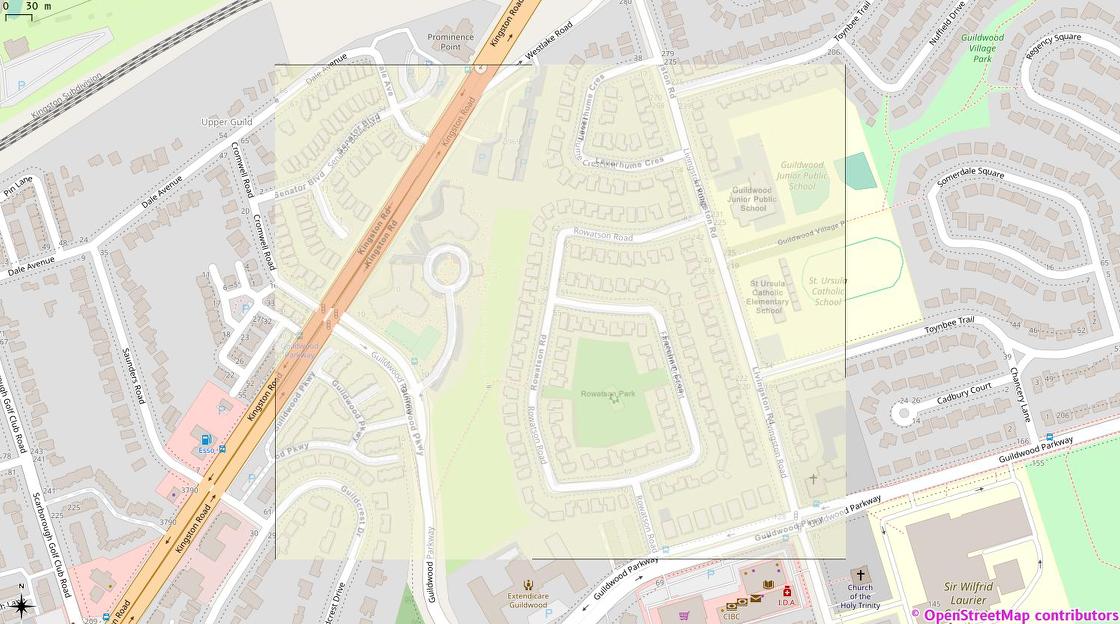
TPS tweet image of Rowatson Park, Scarborough overlaid on OSM tiles in QGIS

This is my hastily-georeferenced version of the image from this Toronto Police Operations tweet over OSM tiles in QGis. Note the extreme similarity between the streets and building detail. But also note the complete lack of OSM attribution on TPS’s map …

Location: Guildwood, Scarborough—Guildwood, Scarborough, Toronto, Golden Horseshoe, Ontario, Canada

When preparing to embark on a hike, I want to know if a trail suitable for me (my skill level and the time/energy I have for the hike). I would like to review a map and have trails clearly identified based on their level of difficulty and level of required exertion. There are numerous classification systems which grade trails for hiking and mountain biking including the Swiss Alpine Club Rating scale, German Single-track Scale, International Mountain Mike Association scale, Yosemite Decimal System, Australian Walking Track Grading System, the Sierra Club scale, the Appalachian Mountain Club, and Shenandoah National Park and Pigeon Forge National Park, and the US Forest Service and others. These rating systems variously take into account surface condition and obstacles, steepness, trail visibility, required gear, required wayfarer skills, risk/exposure, length, and elevation change.

Several of the established scales focus on exertion level based on length/elevation with different formulas but don’t take into account technical difficulty (National Park Service and Appalachian Mountain Club, Sierra Club). Several focus terrain and skill required with criteria for peak and/or average incline, surface material, smoothness, visibility, required gear, and risk/exposure (SAC, MTB, YDS, and USFS). While others combine these factors (Australian System, and Adventure Nerds). Others have proposed modifications/alternative scales that have not been widely adopted, but attempt to merge and isolate key factors.

See full entry

Posted by mariotomo on 7 August 2022 in English. Last updated on 9 August 2022.

A note to myself

This is a note I’m writing to myself, but sharing it to the wider OSM community. I’m a great fan of OSM as a close-to-perfect means for producing this beautiful free geographic database we have, and I like Telegram as an informal platform. I’ve been using Telegram while discussing OSM changesets with fellow mappers, switching from changeset comments that were slowing down the communication, being less interactive and not letting us share images.

me on Telegram

On Telegram I founded the Comunidad OSM Panamá (let’s call it COP here), to which I’ve been inviting mappers who start contributing OSM data in Panama. I have also been made owner of the OpenStreetMap Off Topic (OOT) group, a quite diversified community of mappers who sometimes want to talk about anything else but mapping. In both groups I implement a very simple set of rules: 1) introduce yourself when you enter; 2) assume and practice good faith; 3) try to be nice to each other.

the CoC

In particular in the OOT group we have discussed some meta-issues, like when the OSMF was discussing the need for a formal Code of Conduct. From those discussions, I distilled my personal reasons for decidedly contrasting the formalization of “norms”, on top of what should be shared “values”: if we don’t agree on values, there’s no set of norms that will keep us together. Also, should we once agreed on a set of norms, we would need a group of enforcers, and while on the OSM platforms we have the OSM Foundation to perform that role, on Telegram we are outside the Foundation’s jurisdiction. Cutting it short, in my opinion, if we need the protection offered by the OSM Code of Conduct, we must stay on OSM services.

an event on official channels

See full entry

Posted by coolmule0 on 6 August 2022 in English. Last updated on 8 August 2022.

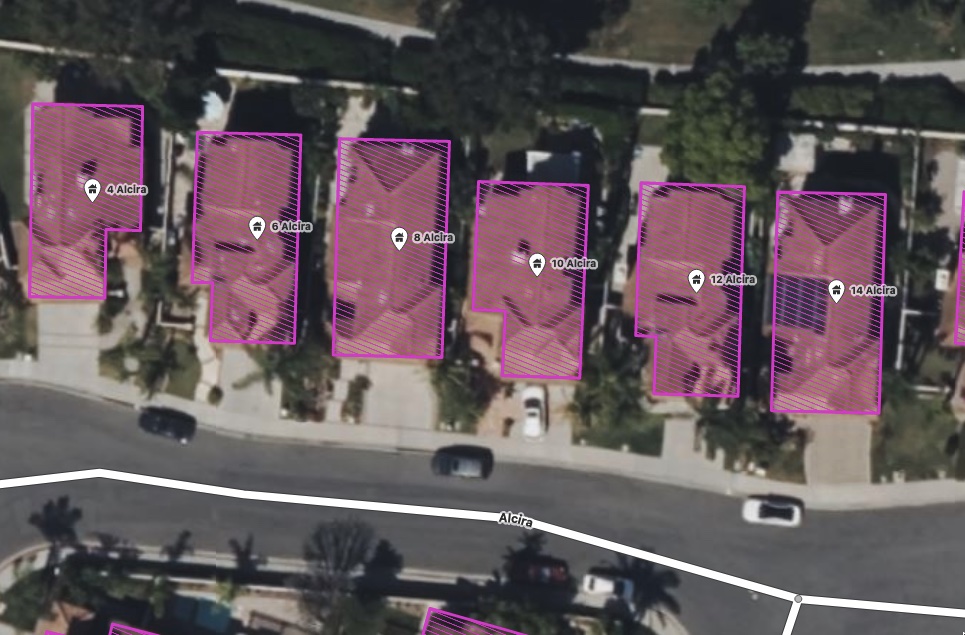
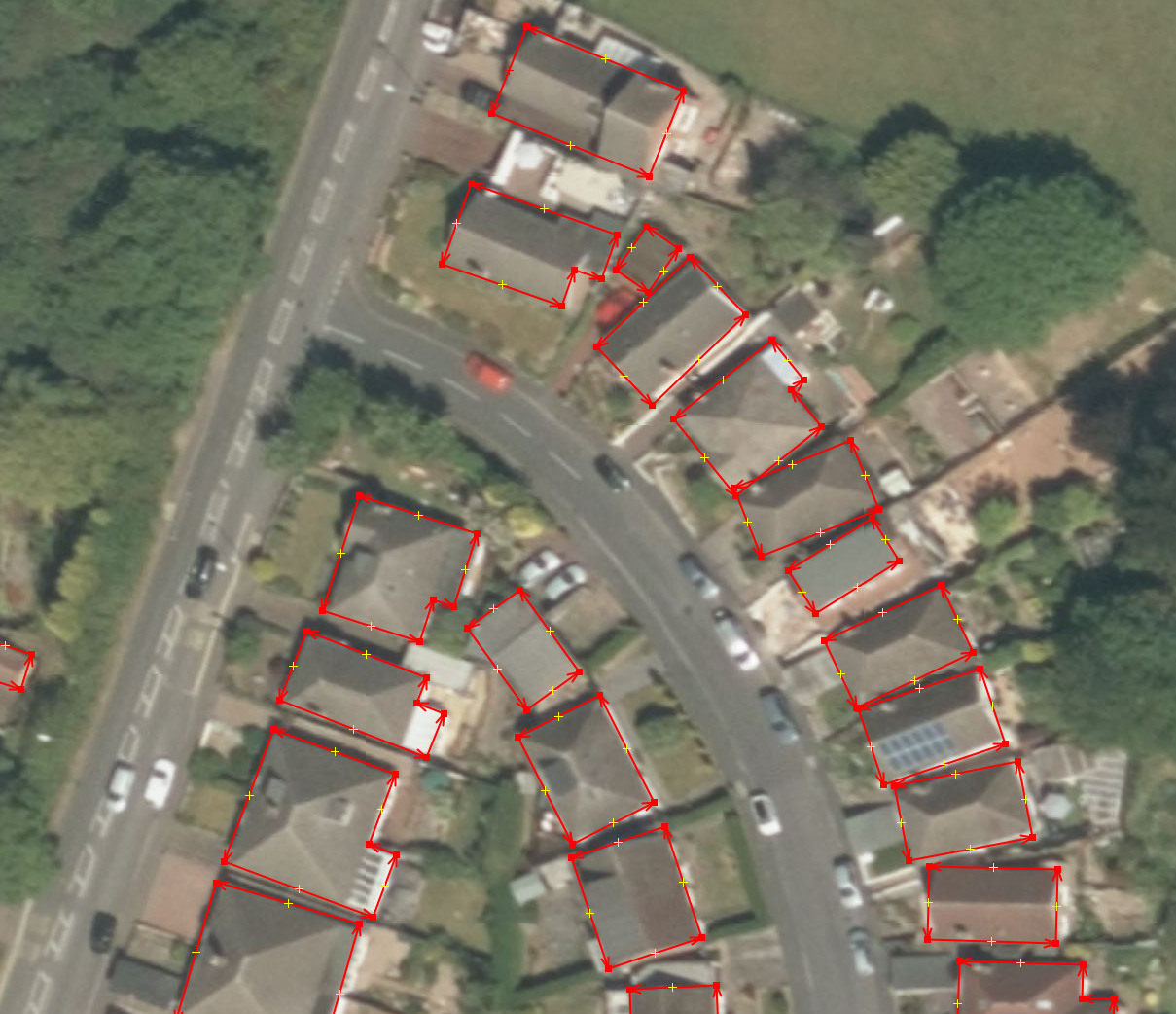
Microsoft have recently released their “Worldwide building footprints derived from satellite imagery”. This is a dataset containing the shape and positions of houses. It covers many parts of the world and is derived from Bing aerial imagery with the use of deep learning.

Data within JOSM

I find these footprints interesting for numerous reasons. The focus here will be to use the data to aid in mapping. There is further information on the OSM wiki.

In this diary entry I want to explain how I got the data into JOSM. In a following entry I will explain how I use this data to speed up building mapping.

Obtaining the data

The data is freely available on Github. It is licensed under ODbL and is compatible with OpenStreetMap. Each available country has its own zip file. Some of the files are of the order of gigabytes - far larger than can be opened in regular software. Pick a country and download the zip file.

Issues with the data

See full entry