Log in again to this web interface because i cant find an easy way to open GPX using Vespucci in Android.
Anyone editing OSM using Android? Please suggest better alternative than Vespucci.
Thank you.
 OpenStreetMap
Log in again to this web interface because i cant find an easy way to open GPX using Vespucci in Android.
Anyone editing OSM using Android? Please suggest better alternative than Vespucci.
Thank you.
Hello. I created this account for one reason: to plead with the creators to delete this software’s source code entirely. Its existence is an affront to humanity. If we erase every trace of it. pretend it was never even conceived. we might still spare countless people by guiding them toward software that actually includes speed limits, speed cameras, and school-zone warnings. That future would be far brighter than the one built on a map this catastrophically useless.
Example of uselessness:
https://i.imgur.com/camYrY1.png
That’s just a left turn, btw.
Fairview is comprised of smaller former real estate ventures. When a new area was built it was given a name by its developers. I am slowly researching those development names and adding them to OSM as I go. My neighborhood, for example, was called Hill-N-Dale. Tonight I’m working on Hayward Heights, which still displays its sign where it branches off from East Avenue.
Not a lot to say, other than “I’m glad to be starting!” I set up the following in my profile, which seemed as good a place to start as any:
GIS amateur in rural Maine, United States
Hi there! I’m Geo, and I’m thrilled to contribute to public GIS data & resources! I’ve been editing Wikipedia since 2005, but despite registering in 2008, I’ve only started editing OSM in late 2025!
I can bring local knowledge from my area of Maine - Waldo County - and possibly more.
Recently I’ve made some logos for the Italian community (osm.wiki/Logos#in_Italy) and today I want to tell you how to I make this logos.
The first step is always to analyze what data do I need to represent and research how to get it, the https://osm-boundaries.com/ has been helpful to get this data and to get a first imprint of how the border is.
I usually download the data in an OSM format and then I use the ogr2ogr tool to convert the data in a format compatible with QGIS like GPKGs, this will be important later in the creation of the logo since I need the representation to be an SVG file to put together with all the other elements of the logo, like the map and the magnifying glass.
After downloading boundaries I start searching all the elements and how I need to represent them in the map, like for the Italian railway logo I proceeded to make different GPKGs file with all the necessary railway data divided into the various types, this can be achieved with a regional osm file, osmium and ogs2ogr.
After this we have to put together the data, and believe it or not this is going to be the hard part.
After making the GPKGs we open QGIS and open the files with it, by doing this we can put them together and customize the representation of the data for the logo, after this we can make a layout and render an SVG file from all the data we’ve imported.
Once we have the SVG export we are able to use a program like Inkscape to put together the SVG file with the default Logo file, usually what I do is deleting unnecessary detail from the original logo, changing the background color and making changes to other details in SVG to mek the logo look better or more personalized.
Once done this the only thing left to do is giving the logo to the community and “fine-tune” it based on opinions.
I’ve lived in this unincorporated neighborhood since 2004. Earlier this year, the U.S. Post Office with feedback from the Fairview Municipal Advisory Council (and surveys sent to residents) reverted our place name from “Unincorporated Hayward” to Fairview while leaving the zip code the same: 94541.
Twenty-one years of living here I’ve learned that you either know about this area and how it works or you’ve never heard of it. I was originally of the “never heard of it.” In 2010 I worked as a census enumerator sent to addresses that hadn’t mailed in their census packet. That’s when I really got to learn how Fairview works and how to use local data to better understand the area.
Now I am slowly working through my neighborhood in OSM to map it. I started with my house (my second residence here) and I’m working my way out. I am learning by doing (and reading the wiki).
My diary entries are all my own thoughts and do not represent OpenStreetMap, The Humanitarian OpenStreetMap Team (HOT) or any organisation using the HOT systems. Any errors are all my own work.
This first diary entry is based on my response to a mapper on the HOT Slack Channel asking about validation methods.
When it comes to HOT mapping and validation, I’d say there are not really any standards, or training to judge mapping against those standards. It’s a constant frustration of mine. However, the use of the data should be considered when validating tasks. If a road in Africa is a few meters out from a vehicle GPS while driving, does it really matter? The driver is going to follow the track. Relative positions are more important - do things match what might be seen in the field?
Skipping a task that you don’t feel experienced enough to validate seems a mature approach to me. I also try to map a few tasks in a project before validating tasks to get some understanding of the problems mappers may face.
I’ve only been seriously HOT mapping with some validation since early 2024, although I’ve mapped in a small way since April 2019, including my own locality. I’ve developed the thought that there are three basic types of validators;
Haihole Dam is constructed across Kanee halla river near Haihole village about 12 Km from Shimoga city. Kane halla is a small tributary to Tunga River which originates in Shankaragudda hills and flows mostly in thick forest. This dam is located at longitude 75deg 28’ 45” E and Latitude 13deg 53’ 08” N in the limits of Haihole village in Shimoga taluk and district. This dam has been constructed during the period 1976-79 and is in operation since then The independent catchment area of the river at the dam site is 37.81 sqkm. The stream has its origin in a fairly heavy rainfall area with its entire catchment being in hilly and forest region and hence considered as Good for yield calculation. There are gauge stations situated near to the catchment area. However four influencing rain gauge station visa, (1) Malur (2) Aynur (3) Shimoga (4) Umblebylu have been considered for yield calculation. These polygons has been drawn on the basis of these four influencing rain gauge stations and the average rain falls have been calculated for these four rain gauge stations taking into consideration the rain fall of Ten years (1952 to 1963). The average rain fall works out to 98.55 cm with 70% dependability (year 1956) Considering the catchment area as Good for average annual rainfall of 98.55 cm the yield available at dam site is 13.52 cum (477.00 mcft.) apart from this perennially flowing two small streams across which the dam is constructed discharge about 0.11 to 0.14 Cumecs during the summer months due to the existence of some springs in the Shankaragudda hills also contribute to yield. There is good flow during the monsoon months and fair flow during November and December.
anyone in my area want to help me learn this. Having touble piping in my gps puck into OSM. I do SKYWARN and use my laptop and gps regulalry with other applications with no issues. I just want to learn osm.
Does anyone on here know the history of families in the area? Where they lived? May still live? I have tracked my Caskey ancestors to this area and am seeking info on them. My great great grandfather was from this place and moved to Yarmouth, Nova Scotia, Canada. His name was William Caskey. Cheers.
dear diary i love <3 osm

The https://www.openstreetmap.org website currently has two “OSM-hosted” map styles on it - the “Standard” style (raster tiles) and a “Shortbread” one. The schema for “Shortbread” is here, and the display style shown is “Colorful” from Versatiles. It looks like this:
For the last 10 days I’ve been travelling in Europe to go to OSM events. I have some spare time before my flights to get home to Vancouver, so I’m posting a brief overview of the events and what got done.
My first event was the Karlsruhe hack weekend. This event is held twice a year and attracts lots of German and Swiss OSM developers. I started out by discovering that the jet lag is worse as I get older and I missed the pre-event social.
At the event itself I focused on the Shortbread Vector Tiles specification and osm2pgsql. In total three people from the Shortbread steering committee were at the event. The main Shortbread coding that’s been completed was a cleanup of the tables in the 1.0 spec. I think this is the last change we’ll see to 1.0 and all my Shortbread focus is now on 1.1.
I haven’t yet published the changes but support for multiple languages in the OSMF shortbread vector tiles is basically done. I just need to clean up some changes and add them to the WIP commit. Initially the language list is only en and de, but it’s ready to be added to.
I met with the two other maintainers of osm2pgsql and we discussed what’s necessary to tag releases of osm2pgsql-themepark. I think we’ve got a route forward there.
I spent the Monday after the hack weekend around town. The next morning I started for Nottingham via the Eurostar train. While I was in Nottingham I visited relatives and didn’t do anything OSM-related.
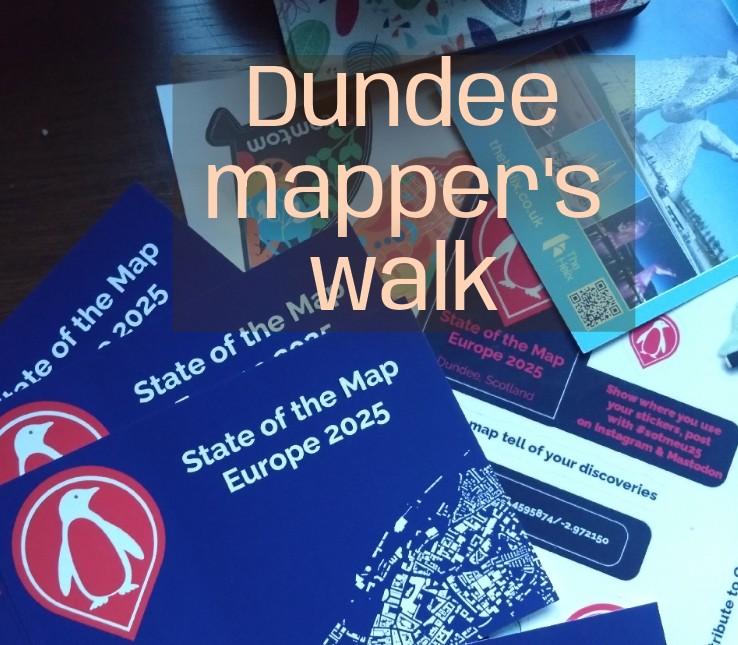
On the trip north to Dundee I got a cheap seat upgrade on the train to Edinburgh. This gave me three hours of focused time to work on my SOTM EU presentations.
Disaster Respond Desa Cibeunying Kecamatan Majenang Kabupaten Cilacap
| Topographic Map Cilacap - BIG |
I’ve been tagging my local area for the last 2 years, and where I live, there are areas which are small yet notable, often past plantations or well known locations usually with origins in colonialist’s estates. For example, Clement Hill was a plantation centered on the house called Mound Court, where Benjamin Clement and his descendants once did their business. As such, the location got called Clement Hill. Similar things happened with Viewmont, New Glasgow, Green Hill, etc. What has confused me though is how to tag these locations. Despite all being the same sort of thing, they all get treated differently, even between maps. Yet they are all single notable locations, either inhabited or not, centered around tracts of land where farms or plantation houses were or are present. There are multiple tags in OSM that cover similar ideas, such as: 1. a locality 2. an isolated settlement 3. a plot 4. a farm 5. a named house 6. a residential area 7. a historic location And as I said, maps treat them differently. Some maps treat them as residences while others highlight them like they do hamlets and towns. Sometimes the location is specified as the name of the plot while other times it’s referring to the general area instead. So how do you tag all these similar yet different locations? I’d like an unambiguous “plantation” or “estate” location tag which signifies that the location: 1. is or was a place where an estate was located. 2. is used like a general settlement name . 3. is between a farm, a plot, and a locality or isolated settlement as not all of these locations are exactly any of them. 4. but conveys the one idea of a significant plantation or similar settlement, either existent or no longer existent, that can be surrounded by smaller residences or be a lone estate, as these 2 scenarios are common in rural Virginia and are both considered the same sort of thing.
It’s been a while since I posted, and we’ve been working hard in the background to add more (and safe) OSM contributing. Since last we spoke, we’ve actually been in court, defending ourselves against a “competitor” (I wouldn’t consider us competitors, we’re in the same space but they’re for-pay and we’re Libre, Open Source, Open, and Free) who claimed we “stole” their data.
Funnily enough, “their” data seems to come straight from OSM. When I contributed an albergue a while back, I made a typo (è instead of é) and it’s in their dataset. So, yeah, we won, they paid, and they cried. Cheaters always accuse others of cheating.
We renamed ourselves from Camino Now to Ultreia.me, because another competitor didn’t like the fact that we had “Camino” in the name and sued as well.
There is a LOT of money to be made with those apps, which is why they all hate being threatened by a free/libre alternative.
Anyhow, we now sync hostel data back. Mainly telephone numbers, opening hours, wheelchair access, kitchen access, washer/dryer, those things.
Individual Residential Area