I have collected data for google
no wait I didn’t
 OpenStreetMap
I have collected data for google
no wait I didn’t
Yep, it was a mistake :(
website for donation: https://opencollective.com/playzinhoagro
Preciso da sua ajuda: Como você pode ajudar a apoiar meu trabalho Criada por PlayzinhoAgro a 10 setembro 2022 em Portuguese (Português) English Version
Nesses últimos 2 anos como voluntário em tempo integral desenvolvi vários projetos de mapeamento pelo Brasil, por acreditar ser meu dever contribuir por conta do deficit que o mapa tinha na minha região. Minha meta como mapeador é tentar diminuir os espaços em branco no OpenStreetMap para que mais pessoas possam usá-los e assim mais mapeadores surgirem.
Entendo que nem todo mundo tem tempo ou interesse em mapear, no máximo fica no básico e muitas vezes acaba esquecendo do OSM por não consegui usar no seu dia a dia, ainda mais em um país como o Brasil onde dificilmente um trabalhador teria tempo para ficar atualizando mapas.
Tenho me dedicado diariamente ao OSM, mas infelizmente isso tem um custo e já que não sou nenhum herdeiro, tem sido bem difícil conciliar meu trabalho como voluntário e minha vida pessoal, já passei por fases muito complicadas desde que eu decidi me dedicar em tempo integral, mas também tive muitas ajudas.
Trabalhar no OSM não é uma tarefa fácil, pois seu trabalho nunca está concluído, sempre há novas mudanças que precisam ser mapeadas, erros a serem corrigidos, é um trabalho contínuo que exige certo nível de conhecimento e experiencia adquirida com o tempo.
Um dos primeiros projetos que eu fiz foi usando o DAMN e depois o Taskmanger para poder gerenciar e mapear cidades inteiras, com esse projeto foram quase 20 cidades que foram totalmente mapeadas desde as estradas aos edifícios.
I guess I didn’t keep up with this diary. I’ve been busy since that first entry.
I’ve gone through both Cleveland National Forest and San Bernardino National Forest to fill in and tag forest roads and trails. At this point, both forests should have all of the official routes of travel with their official names and refs. There will be some differences between OSM and the FS Topo data source where conditions on the ground are different from what USFS has in their data set.
I also worked with a team of mappers to update all the Sq___ names that were changed by BGN/USGS in both OSM and Wikidata. (See https://www.doi.gov/pressreleases/interior-department-completes-removal-sq-federal-use and https://edits.nationalmap.gov/apps/gaz-domestic/public/all-official-sq-names.) That made me really happy because the unfortunately named local “Squaw Tit” that I used in my backcountry navigation course is now appropriately named “Mat Kwa’Kurr.”
I have two things going on now. I’m filling in the roads that CBP has made in the Jacumba Wilderness Area. There’s been a lot of activity out there recently and some construction work on two new border wall segments. This activity is controversial for a number of reasons, so I think it’s important to document the impact CBP has had in the area.
I’ve also started working with the BLM Ground Transportation Linear Features data set to fill in backcountry routes in SoCal.
I’m starting with the area around Superstition Mountain in Imperial County because it’s a popular area for off-road activities. The terrain there makes navigation challenging, so good maps can make a huge difference.
Unfortunately, the shifting sand dunes in the area also make mapping difficult. And the BLM data is not very good. The BLM tracks wander off into places where there are no tracks on the ground. And the BLM tracks take some improbably dangerous routes over surface features, like crossing the sharp crest of a soft sand dune.
osm.org/user/PlayzinhoAgro/diary/397900 e Apoiado Pela UMBRAOSM - União dos Mapeadores Brasileiros do Openstreetmap.
osm.org/user/PlayzinhoAgro/diary/397900 and Supported by UMBRAOSM - Union of Brazilian Mappers of Openstreetmap.
Reimaginando o perfil de usuário do OSM
Reimagining the OSM User Profile
I would like to start by explaining that this is an exercise in imagination on how we could improve the UX/UI in the OSM profile, this means that some changes were based on my experience and there are still some things missing that I have not explored, like the Diaries, settings and Messages, I would love to get feedbacks from you!!!
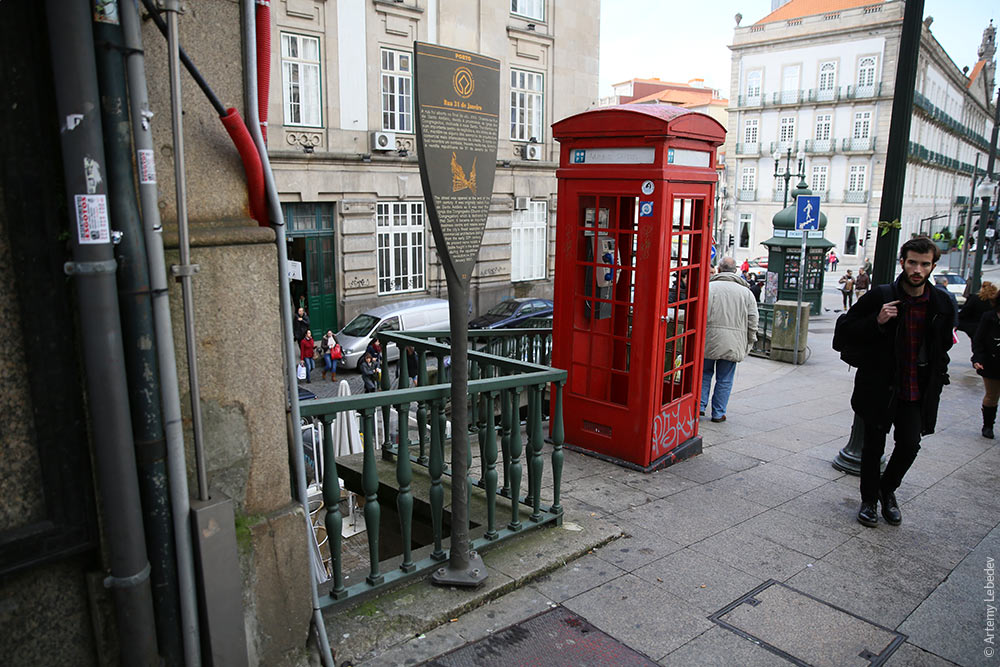
In 1992 Philippe Starck designed [oar-shaped plaques] for Paris(https://fr.wikipedia.org/wiki/Panneau_Histoire_de_Paris). They highlight historical buildings and looked very nice!
In 20o1 Porto was crowned European Capital of Culture, congrats! It involved a lot of development, like a reconstruction of Jardim da Cordoaria. But also installation of the Stark Plaques.
Location and a full list of this plaques is a mystery and is not on the internet! Ironically, the land of explorers is an unexplored unmapped land.
Current list is tracked on OSM wiki.
Fun fact, renowned/infamous explorer Artemy Lebedev took a picture of a plaque that no longer exists.
I need your help with finding precise location with photographing these plaques:
osm.org/?mlat=41.145111&mlon=-8.611339&zoom=15#map=19/41.14510/-8.61130
Please dm me if you have any updates about these Porto Plaques.
Thank you!
I am terrible at keeping journals, and this will probably be no exception, but I have been enjoying some folks’ regular updates about what they have been up to in the OpenStreetMap world. So let’s give this a try! Two weeks late already for October; life got in the way..
I’ve had a pretty active mapping month, but also all over the place, more so than usual.
How to replicate a OSM database: https://jakobmiksch.eu/post/osm2pgsql-replication-script/
How to convert polygons to points: https://jakobmiksch.eu/post/osm2pgsql-point-polygon/
Today was my second mapathon and i really enjoyed it cause was fun mapping. i thank all the people who help me learn this new skill
This is my first attempt on the subject of the title divided in 6 topics. Sorry for the long text (but could be far longer).
Disclaimer: low experience as OSM mapper!
While I do have prior advanced experience in other areas, as you can see from my account, I’m so new to the project that as a newbie user of iD left after the tutorial in India I got scared that if someone touches something, after that validators will assume that person is responsible for errors in that something. In my case it was “Mapbox: Fictional mapping” from OSMCha.
So assume that this text is written by someone who one day ignored iD warnings for something I touched, still not sure how to fix the changeset 127073124 😐
Some parts of this post, such as reference to notability (from this discussion here osm.wiki/Talk:Wiki#Use_Wikibase_to_document_OSM_software) and gives some hints of unexplored potential which not even current OpenStreetMap Data items are doing (from this discussion here Remove Wikibase extension from all OSM wikis #764) are the reason for the dismistifing part of the title.
I tried to find how OpenStreetMap defines notability, but the closest I found was this:
For sake of this post:
What I discovered is that Commons already is used as a suggested place to host for example images, in particular what would go on the OpenStreetMap Wiki.
Wikipedia is likely to be far more well known than Wikidata and (I suppose) people know that Wikipedias tend to be quite strict on what goes there.
I recently discovered that the county assessor has put a version of the parcel database online, searchable by a web map interface. Most of the parcel entries in the database have address information that can be entered into OSM.
My workflow is to use a split screen. On one side I have a browser window open to the assessor’s web map interface. On the other I have JOSM running. I use the address tool to manually fill in the information.
While Whitman County is a little larger than the state of Delaware in area, it only has a population of around 50,000. I plan to start with the small communities and rural areas of the county then progress to the city of Pullman.
This was my original question on the Wiki :
The OpenStreetMap Foundation ("OSMF") already had discussions and even a committee on takeover mitigation and this question focuses on this topic. The Humanitarian OpenStreetMap Team United States Inc ("HOTUSI"), which it's grow up over 100x OSMF budget (using 2020 as year, 26,562,141 USD vs 226,273 GBP), on its board minutes date 2022-01-24 (archived version here) already admitted interest on trademark agreement "with clear, irrevocable rights to the name" as option to "Ensure that the HOT Brand name is not in danger and is formerly in HOT’s hands", however this explicitly require OpenStreetMap Foundation approval at least once in its history. Already before this election, the new discourse community, which is public know have receive support from HOTUSI, had a paid HOTUSI employee closing a discussion about HOTUSI which also asked why the site redesign still being delayed to a point of know to not happens before the OpenStreetMap Foundation election, even if this already was asked on OSMF mail lists, and the incident sparked a discussion on handling conflict of interest on moderation channels. At this very moment of the history of OpenStreetMap, majority of candidates in this election do have links with HOTUSI, so it is viable that the result will allow a single corporation to make decisions in self interest against OSMF, in which you hopefully will win as a candidate. So the question to you is: how will you handle conflicts of interest in the OpenStreetMap Foundation board itself under this challenging context?
Regardless of this, I’m actually very okay with the set of official questions proposed for candidates to be asked to answer, since common themes were grouped. And the fact to point to the Trademark Policy was better than the ones I used to contextualize. Fantastic!
I love mapping its so much fun
Americans love cars. More than 90% of households own one, more than 20% of households own 3 or more. Cars stand still most of the time and for that, we need huge amounts of parking.
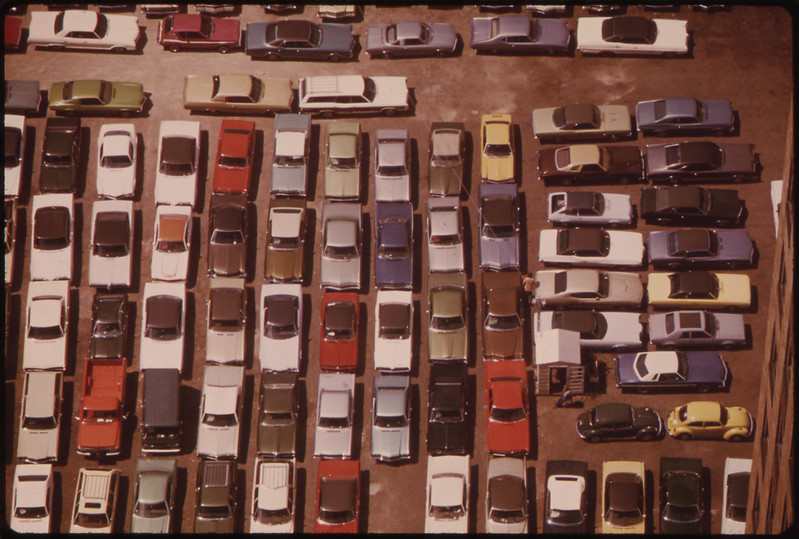
Image source: Flickr Commons
The simplest way to map a parking area in OSM is to draw an area and mark it amenity=parking. It will then show up on the map as a grey area with a blue “P”. In the United States, almost a million areas exist with the amenity=parking tag.
I’m looking for an oasis in the desert
but i can’t find
All I found was a dusty stretch of sand
who seems to laugh at my despair
I’m feeling dehydrated now
throat tightening
as if I can no longer walk this leg
stepping on the dusty grains of sand
can’t feel anymore
I will continue this journey
I’m tired and tired
I can no longer endure
in this barren and arid field
I can no longer endure
in this absence
in this helplessness
I hope that a traveler will come
bring a drop of water that will cool this soul
a soul that hurts because of love
I often use apps using OSM data to find nearby restaurants to go to. However I noticed that most restaurants in my area do not have cuisine information, and many that do have typos or other non-standard values that can’t be processed by the apps I use. This makes it harder to find a place to eat. So I cleaned up all the cuisines in my country to improve the usability of the data that is already there.
Using JOSM I was able to do this at scale. I would do it for more places but it requires some knowledge of local cuisines. I left instructions at the bottom of this post so you can do it for your area if you like.
First I researched all the existing uses (mostly using taginfo) and updated the Key:cuisine wiki to reflect current usage. With a clearer picture of what tags are in use and which are duplicates, I felt confident in sorting through thousands of tags and determining which ones had issues that needed to be fixed.
JOSM allows me to easily download and filter objects. The Tag Editor plugin allows me to easily edit a large list of objects. With these tools I was able to focus on making edits and not on repetitive tasks or on sorting through objects I don’t need to see. The exact steps and filters I used are below.
I want to be clear that I’m specifically trying to avoid making decisions about which tags should or should not be used, and I’m not making any decisions about what cuisines a restaurant serves. I’m merely matching the original mapper’s intent with current tagging standards. Mostly this means fixing typos and syntax, and occasionally moving the information to a different tag.
I made this “brilliant essay” about the US/Canada flag positions on Rainbow Bridge, Niagara Falls.
What does it have to do with OpenStreetMaps?
Well it turns out OpenStreetMaps’ version of the US/Canada boundary is different than that of the International Boundary Commission’s.
Sure hope somebody here will fix it one day, updating OpenStreetMaps’ version with that of the Commission’s.
It’s a series of “turning points” in a river. Sorry about Ground Truth. You’ll just have to trust them.
But if you can’t trust them, who can you trust?
Added my home in Almokhayam Zoon, Abs District, Hajjah Governorate.
Three more quarters left! No more simple points to mark a building anymore!
After a slight nudge from another user, I changed the attributes of the ghost bikes I had entered the day before. And also the attributes of the ghost bike on the outskirts of Pulheim on the border with Cologne. Also, I uploaded a track through Ehrenfeld yesterday.
osm.org/user/warumichRadfahre/traces/5262583
Übersetzt mit DeepL https://www.deepl.com/app/?utm_source=android&utm_medium=app&utm_campaign=share-translation